On Cloud 9 SeriesRepeating Event
The Expo At Glenrose
202 E Bo Gibbs Dr Glen Rose , TX 76043
The Expo At Glenrose
202 E Bo Gibbs Dr Glen Rose , TX 76043
Northcrest Equestrian Center
3900 CR 805 B Cleburne , TX 76301
Legendary Snook Rodeo Arena
11538 FM 3058 Somerville, TX 77879
(JCSP) Johnson County Sheriff's Posse Indoor & Outdoor Arena
1315 North Main Street, Cleburne, TX 76033
Northcrest Equestrian Center
3900 CR 805 B Cleburne , TX 76301
Northcrest Equestrian Center
3900 CR 805 B Cleburne , TX 76301
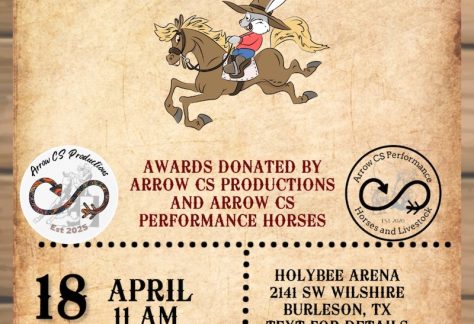
Holybee Arena
2141 SW Wilshire Blvd, Burleson, TX 76028
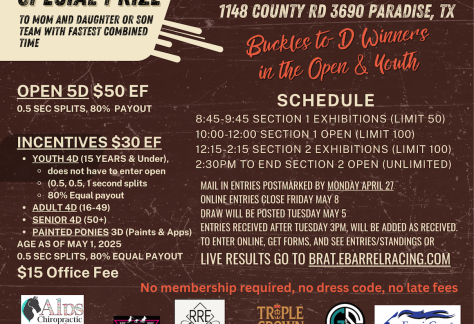
American Paradise Ranch
1148 County Road 3690, Paradise, TX
A bill signed into law by Gov. Jan Brewer will ease the tax burden of equine-based operations, an important industry in the Northeast Valley. House Bill 2552 will place equine breeding, training and stabling facilities into the agricultural property-tax classification. Horse-rescue facilities will be considered agricultural. Previously, for the purposes of property taxes, breeding was the only equine-based operation considered agricultural by the Arizona Department of Revenue. Read more:
The Idaho State Department of Agriculture  is investigating what it’s calling “a suspected outbreak” of Equine Herpes Virus (EHV-1) within the state. Horses may have been exposed to the severe neurological form of EHV-1 at the NCHA Western National Championships in Ogden, Utah held April 30-May 8, 2011. Confirmed and suspected cases of the disease have also been reported in Utah, Colorado and several other states. Two Idaho horses that traveled to the event have died and several others are currently under the care of veterinarians. State Veterinarian, Dr. Bill Barton is recommending horse owners incorporate strict
Six additional horses in Weld and three other counties are showing signs of equine herpesvirus — EHV-1 — according to the Colorado Department of Agriculture. Colorado State University on Monday announced precautions against the disease and canceled events planned at its equine sciences center. The disease was previously confirmed in two horses in Weld County. EHV-1 can be treated if caught early enough, but is fatal in some cases. It can transfer from nose-to-nose contact among horses and can be spread by contaminated tack, equipment and people’s clothing. Dr. Wade Shoemaker of the Countryside Large Animal Clinic